Lid and Base Gift Boxes: Two-Piece Rigid Setup Boxes for Jewelry and Gifts
Lid and base gift boxes explained: two-piece rigid setup construction, sizes and fit, wraps, inserts, MOQ 100 and sampling for jewelry and gifts.
Lid and base gift boxes are the oldest and still the most common rigid packaging format in jewelry and premium gifting: a separate lid that telescopes over a solid base, with no hinges, magnets or folding. Buyers also meet them as two-piece rigid setup boxes, shoulder-neck boxes or simply lid-off boxes, and they remain the default choice wherever a clean silhouette, low tooling cost and dependable protection matter more than a theatrical unboxing. This guide explains how the construction is built, how it compares with drawer, book-style and magnetic boxes, how to size one correctly from product dimensions, which wraps, inserts and branding options work on it, and the MOQ, sampling and lead-time rules for a wholesale order.
What is a lid and base gift box?
A lid and base box is two completely separate rigid components — a shallow or deep base that holds the product and a lid that slides over it from above. Each component starts as thick greyboard, typically 1.5–2 mm, cut and corner-taped into shape, then wrapped by hand or machine in coated, textured or specialty paper, and sometimes PU leather. Because the board is laminated and glued into a permanent three-dimensional form at the factory, the trade calls the result a rigid setup box: it arrives assembled, holds its shape empty, and cannot be folded flat. The fit between lid and base is engineered rather than incidental — production tolerance on the wrapped panels is held to around a hundredth of a centimetre on precision lines so the lid drops smoothly without binding or rattling.
Two fit styles cover most orders. A full telescope lid covers nearly the whole base for the seamless monolithic look of classic jewelry and watch cases. A partial telescope, or shoulder-neck box, leaves a wrapped band of the base visible when closed, letting designers run two colours or a contrast material. Our in-stock lid-off jewelry case is a typical full-telescope example: a chocolate-tone two-piece box at 84 × 57 × 28 mm with a foam insert and a hot-stamped lid logo, made to order from 500 pieces.
Lid and base vs other rigid structures
All rigid boxes share the same greyboard-and-wrap foundation; what separates them is the opening mechanics and whether they ship flat. The lid-and-base format is the reference point — simplest construction, fewest failure points, usually the most economical at volume — while drawers add a sliding sleeve and book-style boxes add a wrapped hinge.
| Structure | How it opens | Ships | Bespoke-size threshold | Best for |
|---|---|---|---|---|
| Lid and base (two-piece) | Lid lifts straight off | Assembled | New die from 300–500 pcs | Jewelry, candles, compact gifts, classic retail |
| Drawer box | Inner tray slides out of a sleeve | Assembled; folding variants ship flat | Stock sizes brand from 100 pcs | Counter retail, controlled reveal, window display |
| Book-style / hinged | Lid flips open along one edge | Mostly assembled | Stock sizes brand from 100 pcs | Necklaces, sets, large lid artwork |
| Foldable magnetic | One-piece rigid box collapses flat | Flat | Stock sizes brand from 100 pcs | E-commerce and freight-sensitive export |
Custom-size thresholds assume a new cutting die and dieline; stock sizes brand from far lower quantities.
Rigid versus folding — the freight question
A lid-and-base box ships as a finished 3D object, so export containers move air alongside board. If freight or warehouse space dominates the brief, our rigid vs folding guide compares assembled setup boxes against flat-shipping magnetic formats, including the roughly 80% volume saving foldable lines achieve.
Read: Rigid vs Folding Gift BoxesWhen the reveal matters more than the silhouette
A sliding drawer turns opening into a controlled motion and supports a PVC display window in the sleeve. Our drawer box guide covers the eight stock inner sizes, sleeve construction and when a drawer wins over a lid-off format for the same product.
Read: Custom Cardboard Drawer BoxesSizing: matching the box to the product
Sizing starts from the product plus its insert, not from the box catalogue. Measure the piece in millimetres, add the insert thickness on every contact face, and keep roughly 5–10 mm of clearance between the insert stack and each inner wall and the closed lid — enough to load easily, little enough that nothing shifts in transit. For jewelry, the compact 84 × 57 × 28 mm lid-off format handles rings, small pendants and earring cards; larger necklaces and sets move into book-style or deep two-piece cases. The wider stock range runs from drawer-scale 8 × 5 × 3 cm inner cavities up to magnetic-setup footprints of 33 × 25 × 12.6 cm, so most briefs land on an existing tool before any custom die is considered.
Two details are easy to miss. First, the lid overlaps the base by 15–25 mm, so the stated outer height is split between visible base depth and lid skirt — draw the product against the base depth, not the total height. Second, bespoke sizes need a new dieline and cutting die, which is why custom two-piece programs start at 300–500 pieces while branding a stock size starts at 100.
Measure once, quote once
Our dimension guide walks through outer versus inner measurements, tolerance and how to record an irregular product so the first sample fits. Send product dimensions and weight with the RFQ and the box size is confirmed against the insert drawing in writing.
Read: How to Measure Box and Bag DimensionsWraps, finishes and inserts
The greyboard skeleton is hidden, so the wrap carries the entire brand impression. Coated paper with matte, gloss or soft-touch laminate is the price-competitive default; linen and leather-grain textured papers add tactility one tier up; and PU leather wraps deliver the stitched, soft-touch luxury used for watches and high-margin jewelry. Logo work follows the wrap: gold, silver and rose-gold hot foil on smooth papers, debossing into textured stock and PU, or full-colour print for artwork and gradients. Because the lid is one uninterrupted panel, the two-piece format offers one of the largest clean logo areas of any rigid structure.
The insert does the protective work. Jewelry uses foam rolls and slots for rings, padded pads and hooks for necklaces, cards for earrings and shaped pillows for watches; cosmetics and gift sets use die-cut EVA or flocked trays with a cavity per component. A correctly designed insert passes the shake test — closed and shaken firmly, nothing inside moves or touches the walls.
Designing the insert with the box
Insert and box should be approved on one white sample: the cavity drawing, box dieline and printed proof are checked together so the tray never binds on the lid or leaves the piece rattling. Our insert guide compares EVA and PE foam, velvet flocking, satin pads, cardboard compartments and vacuum forming, including cavity allowances and flat-shipping trade-offs.
Read: Gift Box Inserts ExplainedMOQ, sampling and lead time
Three quantity tiers apply, and separating them avoids the most common quoting confusion. Unbranded in-stock rigid boxes start at 100 pieces, which lets small brands order a real stock format rather than a generic sample. Adding a foil logo, deboss, print or a wrap change on a stock structure also starts around 100 pieces, because the setup is a plate or block rather than new structural tooling. A fully custom paper-wrapped two-piece box in a bespoke size or colour needs a new dieline and cutting die and typically starts at 300–500 pieces depending on dimensions — the made-to-order lid-off jewelry line, for example, is quoted from 500. No prices are fixed in this guide; every program is quoted against quantity, finish and destination.
The sampling sequence protects the bulk run: a white sample with the rough-cut cavity for a physical fit check, followed by the wrapped, foil-stamped proof, together taking about 5–7 days. Bulk production then runs roughly 15–25 days after sign-off. Stock-structure orders with standard inserts move faster because no die work is involved.
Where this fits in a full custom program
If the two-piece box is one item in a wider branded range — with drawers, magnetic boxes, bags and ribbon — the custom gift boxes hub maps every structure, the three customisation tiers and the complete six-step order timeline in one place.
Read: Custom Gift Boxes WholesaleThe made-to-order lid-off jewelry case leads the two-piece line; the window white-card setup box shows a stock rigid format; book-style and foldable magnetic cases are the hinged and flat-shipping alternatives compared above.
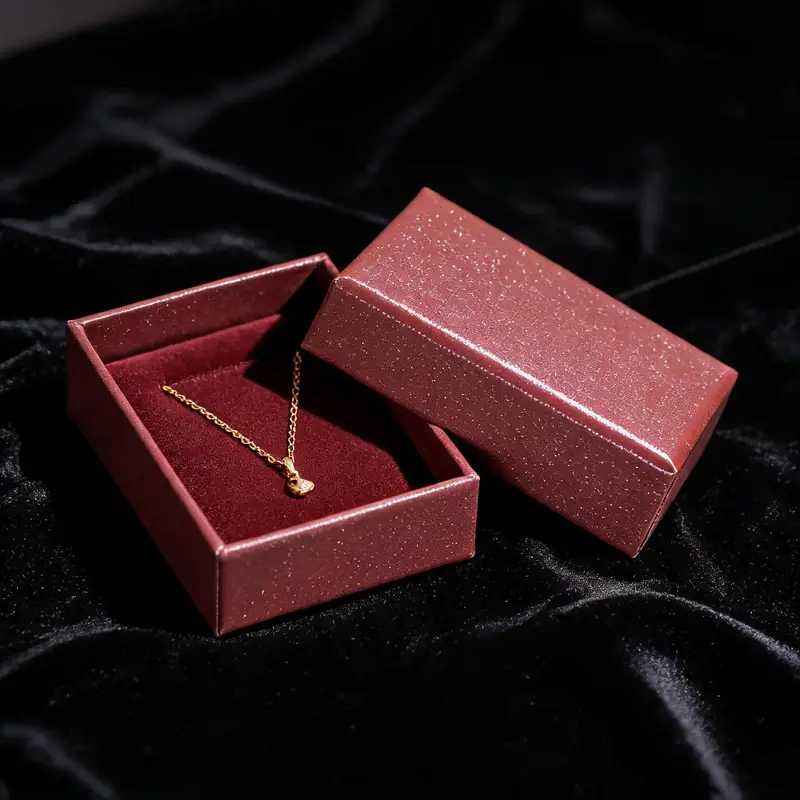 Made to order
Lid & Base Jewelry Box — Necklace, Ring & Earring Presentation Case
MOQ 500$0.22
EXW price
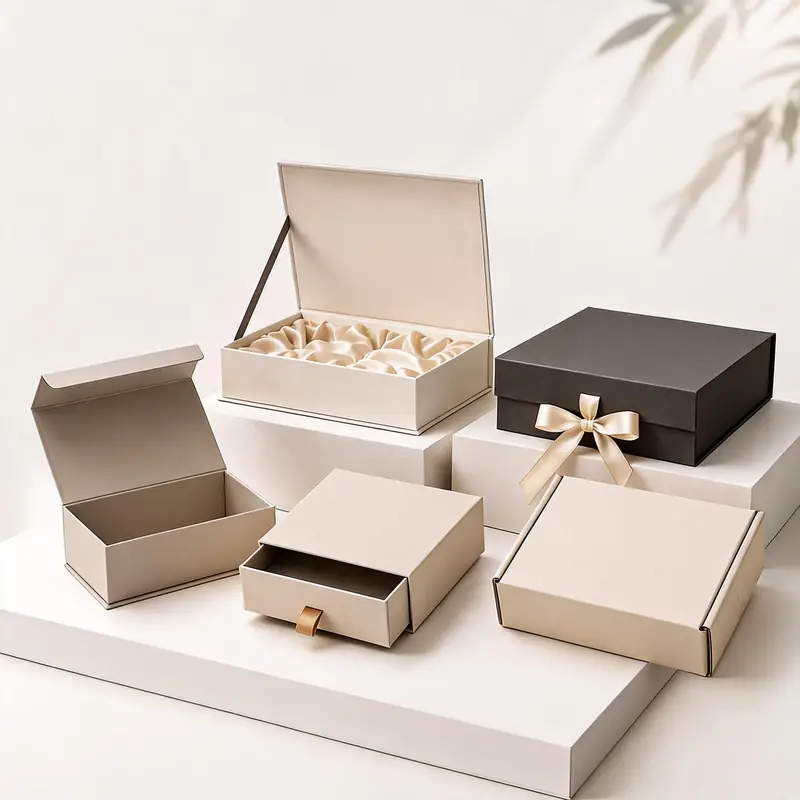 Made to order
Rigid Custom Gift Box — Lid & Base, Drawer, Book-Style & Window Formats
MOQ 100$0.15
EXW price
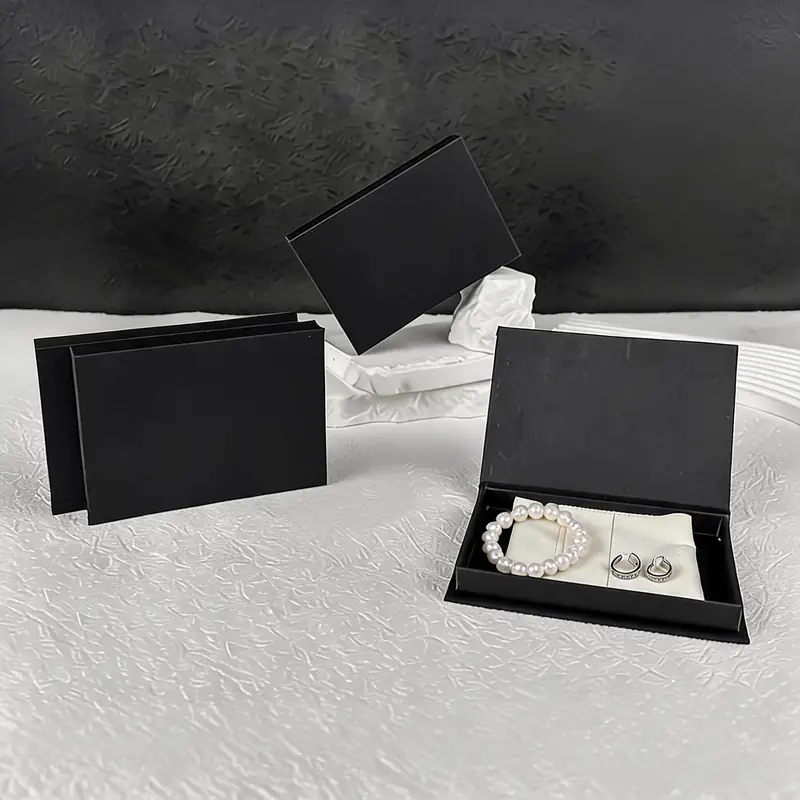 Made to order
Slim Book-Style Jewelry Box — Textured Paper Case
MOQ 100$0.93-1.44
EXW price
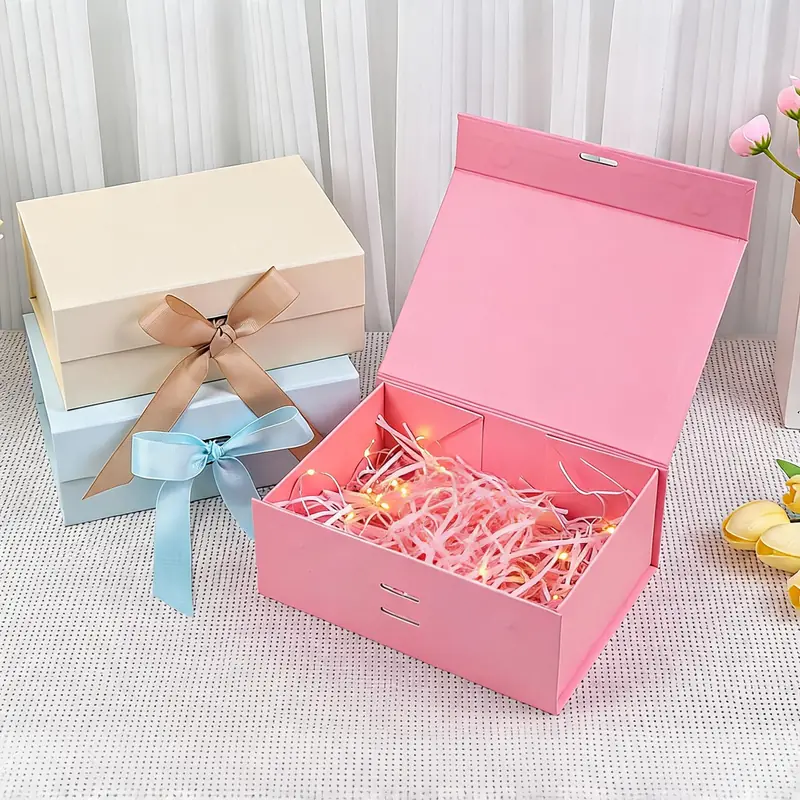 NewMade to order
Magnetic Foldable Gift Box — One-Piece Flip-Top Rigid Packaging Box
MOQ 100$1.56-3.66
EXW price
Specify a lid and base box in one RFQ
Send your product dimensions and weight, preferred stock size or target outer dimensions, wrap and logo finish, insert requirements, quantity and destination. We will confirm fit against the inner dimensions, recommend the insert cavity and quote MOQ, setup and lead time in writing — most requests receive a detailed reply within one business day.
Start your lid and base box RFQFrequently asked questions
What is a lid and base gift box?
A lid and base gift box is a two-piece rigid setup box made from a separate base that holds the product and a lid that telescopes over it. Both parts are built from thick greyboard wrapped in paper or PU, so the box arrives assembled, keeps its shape empty and cannot be folded flat. It is the classic format for jewelry, watches, candles and compact premium gifts.
Is a two-piece rigid setup box the same as a lid and base box?
Yes. Two-piece rigid setup box, lid-and-base, lid-off, shoulder-neck and telescope box all describe the same construction: a wrapped rigid base and a separate wrapped lid with no hinge or magnet. Shoulder-neck is the partial-telescope variant where a band of the base stays visible when the box is closed.
What are lid and base boxes used for?
They are used wherever a clean, rigid, gift-ready silhouette matters: rings, pendants, earrings and bracelets, watches on pillows, cosmetics and perfume, candles, confectionery and corporate gifts. The uninterrupted lid panel also gives one of the largest clean surfaces for a foil or debossed logo, which makes the format popular with boutique brands and retail counters.
What sizes do lid and base gift boxes come in?
Stock rigid lines span compact jewelry formats such as the 84 × 57 × 28 mm lid-off case through to large gift-set footprints around 33 × 25 × 12.6 cm. Bespoke sizes are produced with a new dieline and cutting die, generally from 300–500 pieces. Sizing is based on the product plus its insert, with about 5–10 mm clearance to each inner wall and the closed lid.
Can I add my own logo and a custom insert?
Yes. Hot-foil stamping in gold, silver or rose gold, debossing and full-colour print are all supported, and the foam, velvet or satin insert can be die-cut to cradle a specific piece. Box dieline, cavity drawing and printed proof are approved together on one white sample so the fit and branding are signed off before bulk production.
What is the MOQ for wholesale lid and base gift boxes?
Unbranded in-stock rigid boxes start at 100 pieces, and branding a stock structure with a foil logo, deboss, print or wrap change also starts around 100 pieces. A fully custom paper-wrapped two-piece box in a bespoke size or colour needs a new cutting die and typically starts at 300–500 pieces, depending on dimensions; made-to-order jewelry lines such as the 84 × 57 × 28 mm lid-off case are quoted from 500.
Do lid and base boxes ship flat?
No. A rigid setup box is glued into its permanent 3D form at the factory and ships assembled, which is its main disadvantage on export freight compared with foldable magnetic boxes that collapse flat. Drawer components can partly nest and some book-style cases partly collapse, but a true two-piece lid-and-base box always travels as a finished box.
Can I check a sample before bulk production?
Yes. Stock formats can be supplied as single-piece samples first, and a custom program then produces a white sample with the rough-cut cavity for a fit check, followed by the wrapped and foil-stamped proof, in about 5–7 days. Bulk production of roughly 15–25 days starts only after the fit and finish are signed off.
Need these boxes, bags or ribbon?
Send your product dimensions or dieline and get a quote with MOQ and sample lead time within one business day.