Canvas Tote Bag Weight Explained: 6 oz vs 8 oz vs 10 oz vs 12 oz
Canvas tote bag weight explained for wholesale buyers: oz per square yard converted to GSM, how 6, 8, 10 and 12 oz canvas differ in feel and reuse, and which weight suits promotions, boutiques and grocery.
Canvas tote bag weight is the single spec that decides whether a bag feels like a one-day giveaway or a shopper that comes back for years, and it is quoted in a unit that confuses almost every first-time buyer: the ounce. Suppliers say 8 oz, 10 oz or 12 oz, but the number is not the weight of the bag and it is not paper-style GSM. This guide explains what canvas ounces actually measure, gives a full oz-to-GSM conversion table, compares 6 oz, 8 oz, 10 oz and 12 oz fabric in feel and use, and maps each weight to the job it is best at — promotions, bookstores, boutique retail or heavy grocery loads — with the real weight grid and MOQ behind our canvas line.
What does the “oz” in canvas weight mean?
Canvas weight is measured in ounces per square yard (oz/yd²): the weight of a piece of fabric one yard long and one yard wide. A 10 oz canvas means that square yard weighs 10 ounces — a measure of fabric density, not of the finished bag, which also depends on cut size, gusset and handles. The metric equivalent is grams per square metre (GSM), using the same logic as packaging paper, but over a square metre instead. The conversion is fixed: 1 oz/yd² equals roughly 33.91 GSM, so canvas ounces and paper GSM are comparable numbers once converted — a 12 oz canvas at about 407 GSM is denser than the 260 GSM card used for premium paper bags.
New to GSM as a spec?
GSM (grams per square metre) measures density for both paper and fabric, but it is the wrong spec for sheer materials like organza. Our quick answer covers how GSM works across paper, bags and boxes.
Read: What Does GSM Mean in Packaging?Canvas oz to GSM conversion table
Use this table when a quote arrives in ounces and your spec sheet is in grams, or the reverse. Conversion uses 1 oz/yd² ≈ 33.91 g/m²; figures are rounded to the nearest GSM, the way mills publish them.
| Canvas weight | GSM (approx.) | Market class | Typical life in daily reuse |
|---|---|---|---|
| 5–6 oz | 170–203 GSM | Lightweight promotional cotton | A handful of uses; thin and crushable |
| 8 oz | ≈ 271 GSM | Economy standard for giveaways | Light regular use; folds into a pocket |
| 10 oz | ≈ 339 GSM | All-purpose retail canvas | Months of weekly reuse; the workhorse grade |
| 12 oz | ≈ 407 GSM | Premium reusable canvas | Years of reuse including machine washing |
| 14 oz | ≈ 475 GSM | Heavy-duty utility canvas | Years under heavy, sharp or wet loads |
| 16 oz | ≈ 543 GSM | Industrial / duck canvas | Specialty heavy-load and upholstery-grade jobs |
Standard cotton canvas weight classes. Weight describes fabric density; finished-bag weight also depends on size and construction.
Two traps are worth naming. First, a quoted “8 oz” from one supplier and another are usually close, because mills run standard classes — but ask for GSM in writing on custom orders so there is no ambiguity. Second, do not compare canvas ounces directly with paper-bag GSM numbers without converting; 8 oz canvas sounds small next to 200 GSM paper, yet at roughly 271 GSM in a woven, tear-resistant structure it is far stronger per gram.
6 oz vs 8 oz vs 10 oz vs 12 oz: how they actually differ
| Weight | Hand feel | Print and embroidery behaviour | Best-fit job |
|---|---|---|---|
| 6 oz | Thin, soft, slightly translucent; wrinkles easily | Fine for one-colour print; embroidery puckers | Ultra-cheap conference and flyer-style giveaways |
| 8 oz | Light but opaque; folds small, packs flat | Takes screen print well; small embroidery only | Promotions, event swag, e-commerce pack-ins |
| 10 oz | Firm, structured; holds its shape when loaded | Excellent screen print; embroidery sits clean | Bookstores, retail, gift-with-purchase, daily retail |
| 12 oz | Dense and stiff; stands on its own base | Best for embroidery, large solid prints and washing | Boutique and fashion, grocery, premium corporate |
The four weights buyers choose between for branded totes. Our stocked custom canvas runs 10–12 oz; lighter 8 oz and lightweight cotton styles are available on made-to-order runs.
The difference shows most after a month of use. A 6 oz bag printed for a trade show does its job if carried once; spec'd for grocery it stretches at the handles and goes limp. A 12 oz boutique tote survives machine washing and keeps the logo flat and sharp, which is exactly why premium brands over-spec slightly rather than risk a bag that fails in public. Weight also changes how the bag photographs and displays: 10 oz and up holds a flat front panel, so a centred logo reads cleanly on a shelf or a social post, while 6–8 oz needs the bag filled to look its best.
Choosing weight by use case
| Use case | Recommended weight | Typical size | Notes |
|---|---|---|---|
| Conference / trade-show giveaway | 8 oz (6 oz only for tightest budget) | 30 × 35 or 33 × 38 cm flat | Highest reorder ratio; light weight keeps unit cost and air-freight down |
| E-commerce order / subscription insert | 8–10 oz | 30 × 35 or 35 × 40 cm flat | Folds flat for warehousing; one-colour print keeps reorders consistent |
| Bookstore / stationery retail | 10 oz | 35 × 40 cm | Carries hardcovers without sag; structured panel shows the logo |
| Boutique / fashion / gift-with-purchase | 10–12 oz | 27 × 32 up; ribbon handles at 12 oz | Heavier fabric reads premium; 12 oz ribbon-handle line for gift positioning |
| Grocery / market / heavy loads | 12 oz | 40 × 50 cm or gusseted 40 × 30 × 10 / 45 × 35 × 15 | Wider handle stitching essential; gusset lets the bag stand |
Match weight to the job first; size and handles follow. Sizes referenced are the stocked canvas grid covered in our tote size chart.
Sizing the same order?
Our wholesale size chart covers the full 22 × 25 to 40 × 50 cm grid, gusseted styles, strap lengths and which size fits A4, shoe boxes or grocery loads.
Read: Tote Bag Sizes & Dimensions chartWeight and your logo: print, embroidery and wash
Fabric weight and decoration are linked decisions. Screen printing works across the whole 8–12 oz range and stays the cheapest method for one- to three-colour marks; heat transfer handles full-colour artwork on any weight. Embroidery is where weight bites back: below 10 oz the panel can pucker around dense stitching, so stitched logos belong on 12 oz canvas. Heavier fabric also keeps prints flat after washing — a 12 oz bag can be machine washed repeatedly without the panel warping, while repeated washes shorten the crisp life of prints on 6–8 oz cotton. Full method, print-area and artwork rules are in our custom-logo tote guide.
Decoration detail
Screen print vs heat transfer vs embroidery, logo size tables and artwork file rules — with the same stocked canvas range.
Read: Custom Canvas Tote Bags with Your LogoWeight also changes packing cost
Heavier bags cost more to ship, and the difference is bigger than buyers expect. In a standard 60 × 40 × 40 cm export carton, roughly 200–250 of the 30 × 35 cm 8 oz bags nest flat, but only about 100–120 of the 40 × 50 cm 12 oz size fit — twice the fabric per bag and less room to nest. For air-freighted event orders, a lighter weight and a flat, non-gusseted cut measurably lowers chargeable weight; for sea freight the gap narrows but never disappears. Size and weight should therefore be specified together, not as two separate line items.
The canvas weights we stock: MOQ and lead time
Our stocked custom canvas line centres on the two weights that cover almost every branded order: 10 oz as the all-purpose retail grade and 12 oz for premium, embroidered or heavy-load bags. The 10/12 oz blank range runs from 22 × 25 to 40 × 50 cm in flat cuts plus gusseted 27 × 22 × 10, 40 × 30 × 10 and 45 × 35 × 15 styles, in natural, beige, black and white; the 12 oz ribbon-handle line covers 34 × 38 cm with multi-colour straps. Lighter cotton shoulder and handheld totes cover the low-weight end. Custom logo orders start at MOQ 50–100 pieces depending on the line and dispatch roughly 7–10 days after artwork approval; lighter or fully bespoke weights are made to order on a longer window.
Weights against actual products
Each tote in the canvas bags category shows its fabric weight in oz, dimensions and handle type, so the use-case table above maps directly to a skimmable product list.
Browse canvas bags and totes by weightThe stocked canvas lines above: 10/12 oz blanks across the full size grid with gusseted options, 12 oz ribbon-handle totes, and lightweight cotton shoulder and handheld styles. Custom logo from MOQ 50–100, dispatch about 7–10 days after artwork approval.
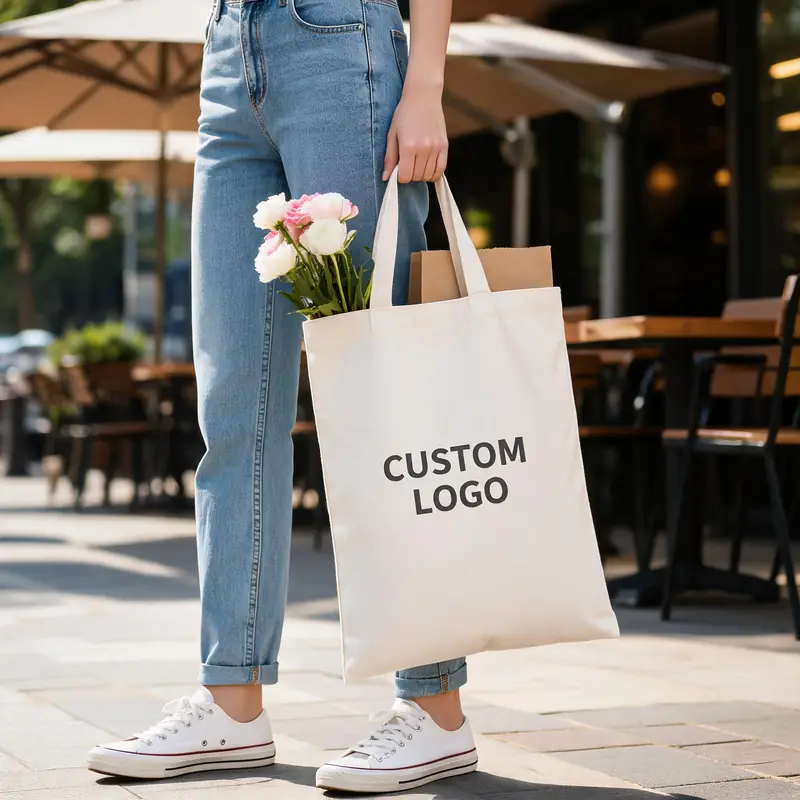 Made to order
Blank Cotton Canvas Tote Bag — 10 oz / 12 oz Promotional Shopper
MOQ 100$0.48-1.13
EXW price
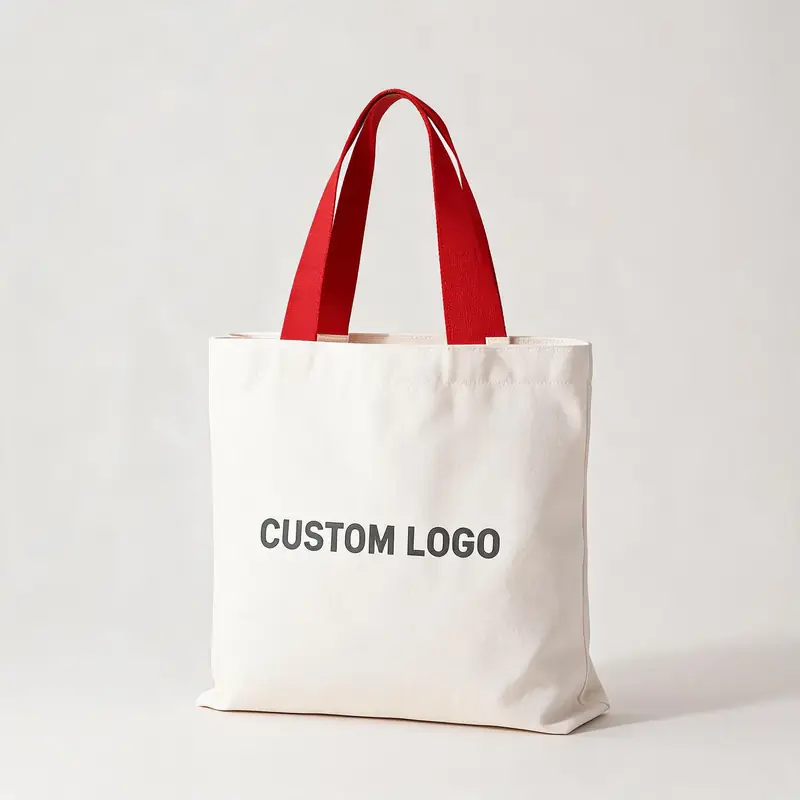 NewMade to order
Ribbon-Handle Canvas Tote — 12 oz Promotional Shopper
MOQ 50$0.46-2.28
EXW price
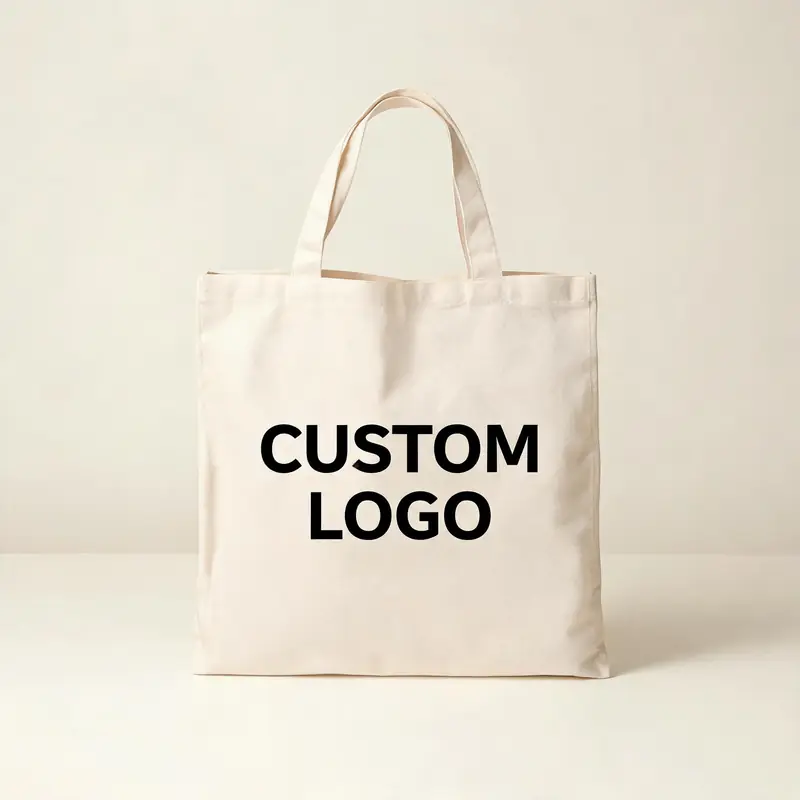 Made to order
Blank Cotton Canvas Shoulder Tote — Student Shopper & Promotional Bag
MOQ 100$0.48-1.07
EXW price
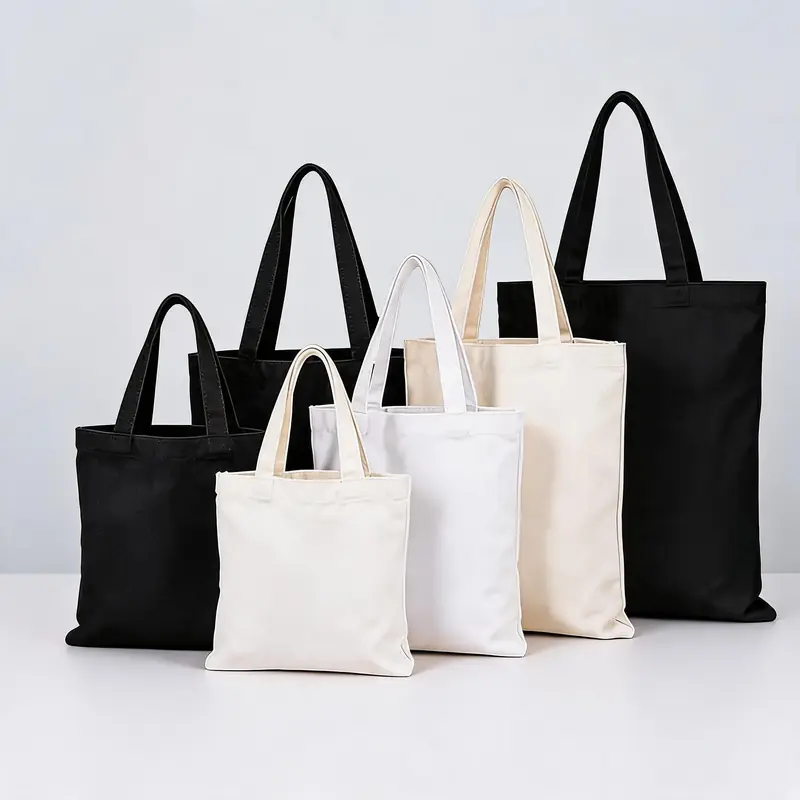 NewMade to order
Blank Cotton Canvas Bag — In-Stock Plain Tote for Logo Printing
MOQ 100$0.38-0.99
EXW price
Not sure which weight your use case needs?
Send the intended use, contents, quantity and deadline. We will recommend a fabric weight and size, confirm printable area, MOQ and lead time, and arrange a printed sample in about 5–7 days — reply within one business day.
Request a canvas weight recommendationCanvas tote bag weight FAQ
Frequently asked questions
What is the difference between 8 oz and 10 oz canvas tote bags?
8 oz canvas (about 271 GSM) is a lightweight economy fabric that folds small and suits one-colour promotional bags, while 10 oz (about 339 GSM) is firmer and structured enough for months of weekly retail reuse. If the bag is a trade-show freebie, 8 oz keeps cost down; if it represents a bookstore or shop and must hold real weight, 10 oz is the safer default.
How many GSM is a 12 oz canvas tote?
Roughly 407 GSM. Canvas ounces convert at 1 oz per square yard ≈ 33.91 grams per square metre, so 12 × 33.91 ≈ 407 GSM. That makes 12 oz canvas denser than the 260 GSM card used for premium paper shopping bags, though the woven structures are not directly comparable in strength.
Is 6 oz canvas good for tote bags?
Only for light, short-life promotional use. 6 oz (about 203 GSM) is thin, wrinkles easily and is prone to handle stretch under load. It takes a simple one-colour print but embroidery puckers it. For general branded giveaways, 8 oz is the usual step up; for anything meant to be reused weekly, choose 10 oz or 12 oz.
Which canvas weight is best for grocery shopping bags?
12 oz canvas (about 407 GSM) in a 40 × 50 cm or gusseted 40 × 30 × 10 / 45 × 35 × 15 cm cut, with reinforced or wider stitching at the handles. The dense fabric stands up to cans, bottles and repeated machine washing, and a gusseted base lets the bag stand while it is packed.
Does heavier canvas change how my logo looks?
Yes, mostly for the better. Screen prints sit well on any 8–12 oz fabric, but embroidery needs 10 oz or denser to avoid puckering, and 12 oz holds dense stitching and large solid prints best. Heavier fabric also keeps a flat front panel in photos and survives repeated washes without the print warping.
What is the MOQ for custom-weight canvas totes?
Our stocked 10 and 12 oz canvas takes custom logos from MOQ 50–100 pieces depending on the line, with dispatch about 7–10 days after artwork approval. Lighter 8 oz or fully bespoke fabric weights are made to order, carry a higher MOQ and need a longer production window; the exact figure is confirmed per product and in the quote.
Does fabric weight affect shipping cost?
Yes. A standard 60 × 40 × 40 cm carton holds roughly 200–250 flat 30 × 35 cm 8 oz bags but only about 100–120 of the 40 × 50 cm 12 oz size, so heavier bags mean more cartons and higher freight per unit. The effect is largest on air-freighted rush orders, which is why event giveaways often pair 8 oz fabric with a flat, non-gusseted cut.
Need these boxes, bags or ribbon?
Send your product dimensions or dieline and get a quote with MOQ and sample lead time within one business day.