Debossing vs Embossing on Gift Boxes and Packaging
Debossing presses a logo into a box; embossing raises it. The difference, plus blind debossing, foil combos, artwork rules, MOQ and lead time.
Debossing and embossing are two ways of putting a logo on packaging without ink: both press the material with a custom metal die using heat and pressure, and the only difference is direction. Embossing raises the mark above the surface in relief; debossing presses it down into the surface as a shallow indentation. On wrapped gift boxes, debossing is the more common of the two, because it works cleanly on a box that is already wrapped in paper or PU leather. This quick guide explains how they differ, what 'blind debossing' means (the term buyers ask about most), and how the finish is ordered on rigid gift and jewelry boxes.
Debossing vs embossing at a glance
| Debossing | Embossing | |
|---|---|---|
| Surface effect | Logo pressed into the box as a recessed indentation | Logo raised above the surface in relief |
| How it reads | Quiet, tonal; the mark shows through light and shadow | More visible; the raised edge catches light |
| Typical job | Understated wordmark centred on a rigid box lid | Monograms and decorative marks on cards and soft covers |
| On a wrapped rigid box | Standard — applied directly through the wrap | Less common — relief is usually formed before wrapping |
Both use a metal die, heat and pressure; only the direction of the mark changes.
A simple way to remember: de-bossing goes down into the material, em-bossing emerges out of it. A debossed mark cannot be felt from a photograph, but it is immediately felt by a finger running across the lid — that texture is exactly why luxury brands use it. The trade-off versus print is subtlety rather than cost: from across a room the logo almost disappears, and the effect relies on light grazing the angled walls of the impression.
What is blind debossing?
Blind debossing is a debossed impression with no foil and no ink — nothing is added to the box, so the logo appears in exactly the same colour as the surface, shaped only by depth and shadow. ('Blind embossing' is the same idea with a raised mark.) It is the most minimal premium finish available: no colour can wear off, there is nothing to misregister, and it pairs naturally with uncoated paper, kraft, matte lamination and PU leather. The alternative is registered or combination debossing, where foil is stamped inside the recessed mark so the logo is both metallic and tactile; that adds a second die pass, tighter registration and cost, so most wholesale orders start with blind.
How debossing works on rigid boxes
A custom brass or metal die is CNC-made from your vector logo, fitted to a hot press, and pushed into the wrapped box lid under heat and pressure, softening the paper and glue so the wrap settles into the greyboard. One die is made per design and kept for repeat orders, so reorders carry only the per-piece operation, not a new setup. The impression needs material with depth to bite into: paper-wrapped rigid greyboard, PU leather covers and dense kraft all work. Thin folding cartons and corrugated mailers generally do not — the board crushes or shows the mark on the inside — so logos on those formats are better done by foil stamping or print.
Debossing vs foil stamping vs print
Blind debossing adds texture but no colour; foil stamping adds a metallic or pigmented film with a shiny, high-contrast logo; offset or UV print adds full colour and fine detail at the lowest cost in volume but feels flat. Foil and debossing can be combined in one registered mark for a logo that is metallic and recessed at once.
See boxes suited to these finishesArtwork, MOQ and lead time on our lines
Artwork should be a vector file (AI, EPS or vector PDF) with the logo as a solid, bold shape: fine hairlines, small serif text and large solid blocks all reproduce poorly, because the die is pressing paper into board, not laying down ink. Keep line thickness above roughly 0.5 mm and treat the mark as one level of depth — gradients and screens cannot be debossed. On our current production, custom debossed branding starts around 100 pieces on PU formats and around 300–500 pieces on paper-wrapped lid-off boxes; choosing a stock structure keeps the structural MOQ low (kraft drawer boxes from 50, magnetic folding boxes from 100), since only the logo die is new. A white sample followed by a debossed proof on the actual wrap takes about 5–7 days, and bulk production then runs roughly 15–25 days depending on quantity and finish.
Stock rigid formats that take a clean debossed mark: magnetic folding and kraft drawer gift boxes, paper-wrapped lid-off jewelry boxes and PU watch/jewelry cases. A custom logo die is made once and reused on reorders.
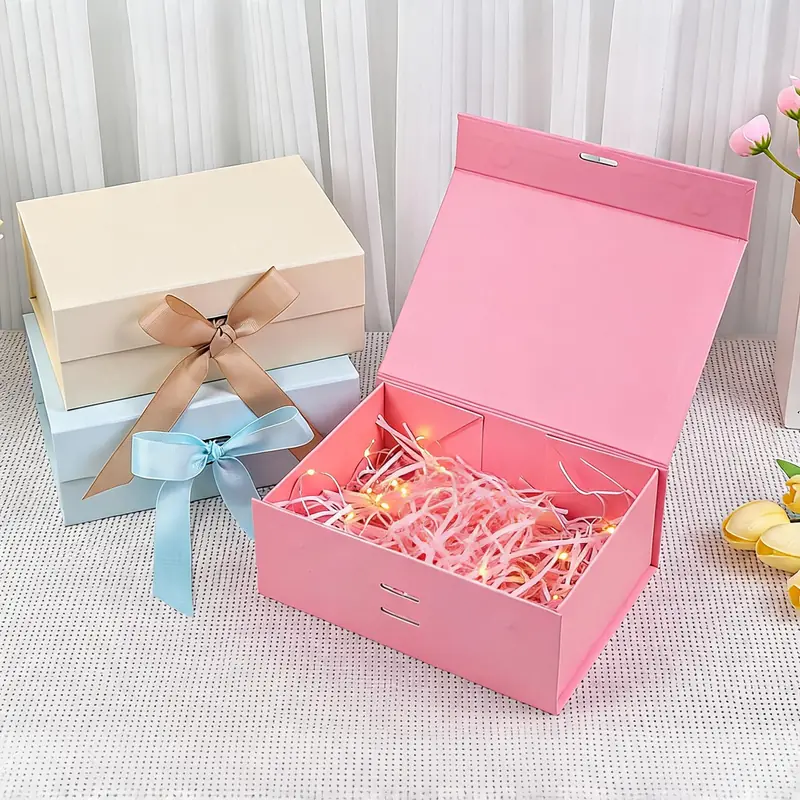 NewMade to order
Magnetic Foldable Gift Box — One-Piece Flip-Top Rigid Packaging Box
MOQ 100$1.56-3.66
EXW price
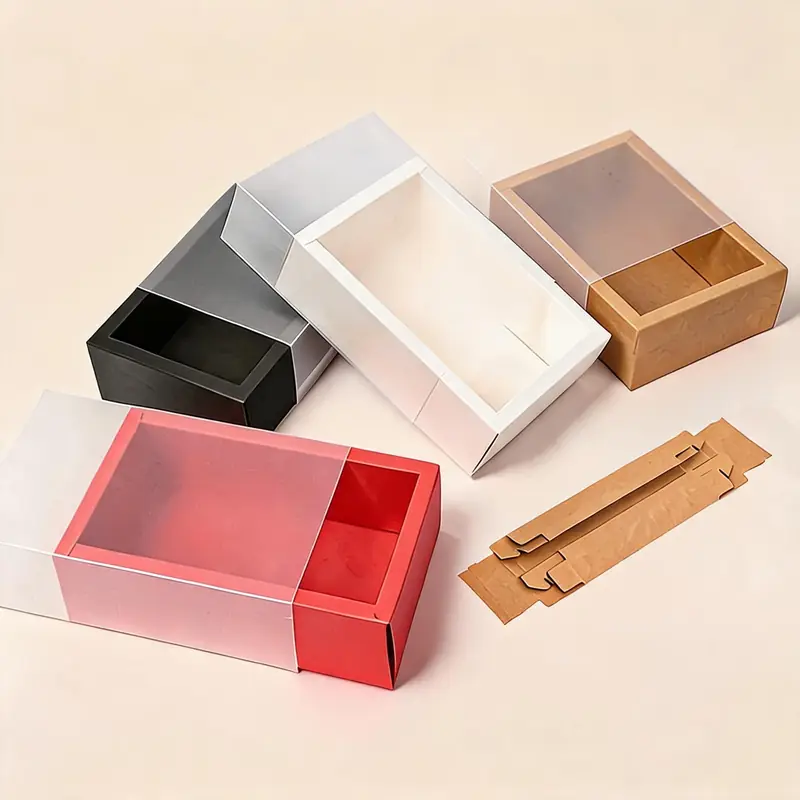 NewMade to order
Kraft Drawer Gift Box — Sliding Sleeve Box with Clear or Frosted Window
MOQ 50$0.15-0.84
EXW price
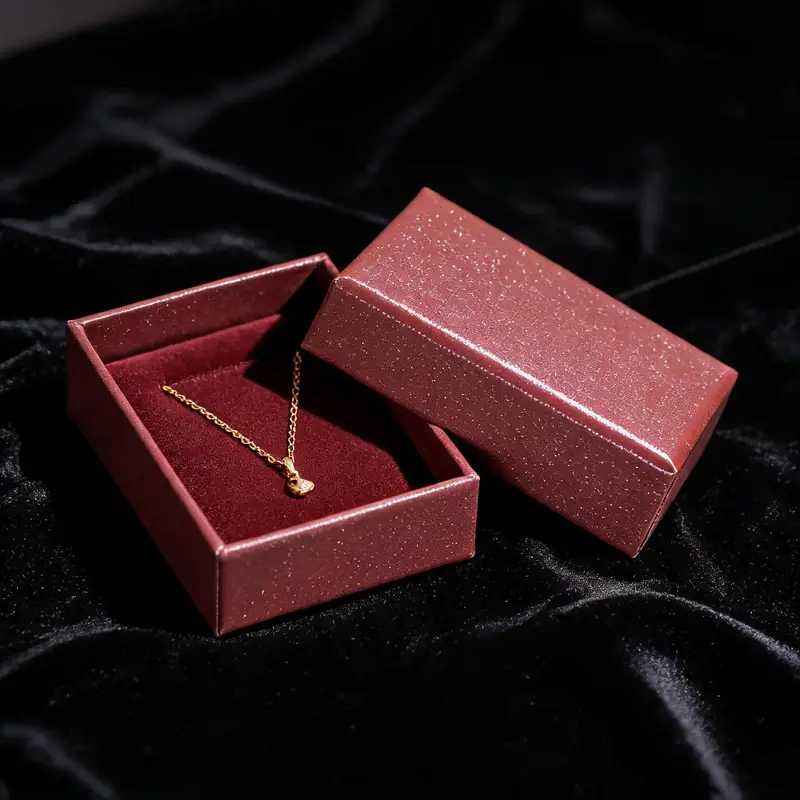 NewMade to order
Lid & Base Jewelry Box — Necklace, Ring & Earring Presentation Case
MOQ 500$0.22
EXW price
 Made to order
PU Leather Watch & Jewelry Gift Box — Flip-Top Presentation Case
MOQ 100$0.85-4.14
EXW price
Choosing a format for the mark
Rigid lid-off and magnetic boxes and PU-covered jewelry cases give the deepest, cleanest impression; the four box families are compared by structure, inserts and MOQ in our jewelry box types guide.
Browse jewelry boxesNot sure deboss or foil will read on your wrap?
Send the box colour, material and vector logo. We will recommend blind deboss, foil or a combination, position the mark, and arrange a debossed proof on the actual material before bulk — reply within one business day.
Request a debossing sampleFrequently asked questions
What does debossing mean?
Debossing means pressing a design into the surface of packaging so the logo sits below the surface as a shallow indentation. A custom metal die is pushed into the wrapped box lid with heat and pressure. It uses no ink or foil unless they are added in a separate combination pass.
What is the difference between debossed and embossed?
A debossed logo is pressed down into the material; an embossed logo is raised above it. Both are made with a metal die and pressure, and neither requires ink — the difference is only whether the mark is recessed or in relief.
What is blind debossing?
Blind debossing is an inkless, foilless deboss: the logo appears in the same colour as the box and is visible only through the indented texture and its shadow. It is the most minimal premium finish and works especially well on kraft, matte and PU surfaces.
Can you deboss any gift box?
No. Debossing needs a thick, dense surface such as paper-wrapped rigid greyboard or PU leather. Thin folding cartons and corrugated mailers crush or show the impression on the inside, so foil stamping or printing is used on those instead.
Is debossing more expensive than foil stamping?
Both need a custom metal die and a press setup, so costs are similar at the same quantity. Blind debossing is a single pass; adding foil inside the impression (combination debossing) adds a second pass and tighter registration, which costs more. The die is made once and reused on reorders.
What is the MOQ for debossed custom boxes?
On our production, branded runs start around 100 pieces for PU-covered boxes and around 300–500 pieces for paper-wrapped lid-off boxes. Stock structures keep the box MOQ lower — kraft drawer boxes from 50 and magnetic folding boxes from 100 — with only the logo die made new. A debossed proof takes about 5–7 days and bulk roughly 15–25 days.
What artwork is needed for debossing?
A vector logo in AI, EPS or PDF, built from solid bold shapes. Avoid hairlines, tiny text and large filled areas; lines should be at least about 0.5 mm thick. Gradients and halftones cannot be debossed because the finish produces one level of physical depth, not shades.
Need these boxes, bags or ribbon?
Send your product dimensions or dieline and get a quote with MOQ and sample lead time within one business day.